Skip to product information
1 of 8

Calyra Metabolic Balance

Calyra Metabolic Balance

What life looks like when food stops working against you:

  • Eat lunch and go right back to work — no crash, no fog, no fighting to stay awake
  • Say "I'm hungry" and just eat — no calculating meetings, drives, or deadlines first
  • Stay sharp at 2pm, 3pm, and through your last meeting of the day
  • Feel steady after eating, every time — not wondering if today's the bad one
  • Finish work with enough energy left for dinner, your family, your evening
  • Eat out, travel, and keep going — instead of needing to lie down
  • Feel like yourself again — normal, capable, dependable, not managing your body all day

3 Free Bonuses — Built to Answer the Questions You're Already Asking

When you order today, you’ll also get our $85 Bonus Bundle — FREE.

The Post-Meal Food Freedom Guide — build meals without another restrictive food-rule system. (No, you don't have to cut carbs or eat tiny meals forever.)

The 14-Day Post-Meal Progress Tracker — see your progress in black and white, meal by meal. (No more wondering if it's actually working.)

The 5-Minute Afternoon Rescue Plan — your simple backup for the rare rough day. (For when you still need to get through the afternoon.)

"Isn't this basically the same as cutting carbs?"

No. Cutting carbs reduces how much glucose enters your system, but it doesn't change how your body handles what does enter. That's like turning down a faucet without fixing a clogged drain — the sink still overflows, just slower. Calyra is designed to support how your body responds to a meal, not to restrict what's on your plate.

"I've tried eating smaller meals and it barely helped. Why would this be different?"

Smaller meals can shrink the crash without addressing why your body reacts the way it does in the first place. You end up managing the amount of food instead of the process behind the response. This works on the process itself.

"I don't think this is a blood sugar issue — my doctor says my glucose is fine."

You're not alone in that. Some people react strongly to meals even when their glucose numbers look normal. That's exactly why Calyra isn't built around chasing a number on a test. It's built around supporting your body's actual response after you eat — which isn't always the same thing as your A1C or fasting glucose.

"I already tried berberine / chromium / a blood sugar supplement and nothing changed."

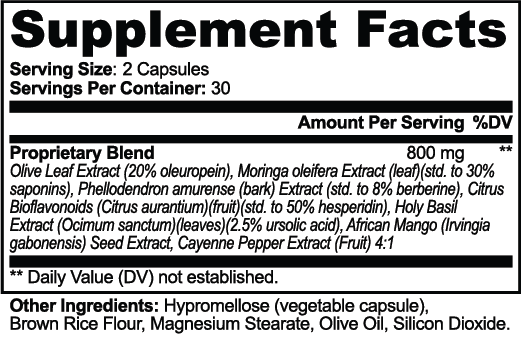
A lot of those ingredients focus on one narrow piece of the puzzle — usually insulin sensitivity — after the fact. Calyra uses a broader blend (olive leaf, moringa, citrus bioflavonoids, and supporting botanicals) aimed at the post-meal response more generally, not just one downstream piece of it.

"Is it just the carbs I'm eating? Should I still avoid bread and pasta?"

Carbs can make things worse for some people, but plenty of sufferers crash after low-carb meals too. If carbs were the whole story, cutting them would fully fix it — and for most people, it doesn't. You don't need to swear off bread forever to use this.

"What if I still crash sometimes?"

Honestly — you might, occasionally. We're not going to pretend one supplement erases every rough afternoon. That's exactly why we include the 5-Minute Afternoon Rescue Plan: a simple backup for the days you still need one.

"How will I know if it's actually working?"

You'll have the 14-Day Post-Meal Progress Tracker to log energy, clarity, and small wins after meals — so instead of guessing, you'll have two weeks of your own notes to look back on.

"What if I try it and it doesn't work for me?"

You've got 75 days total — 60 days to give it a genuine trial, plus 15 more days to decide. If you're not satisfied, you can request a refund. No bottle to mail back, and you keep the bonuses either way.

"Should I just ask my doctor about medication instead?"

If you're on medication like Metformin, that's a conversation to have with your doctor — this isn't a replacement for it. Medication and Calyra address different parts of glucose regulation, so this isn't an either/or decision to make without your provider.

View full details
  • Earliest Stage

    The crash starts feeling less disruptive. You'll notice it after some meals more than others — staying awake and functional starts feeling a little easier.

  • Early Stage

    Less heaviness, less sleepiness, less fog after eating. You can finish lunch and get back to what you were doing without that strong pull to stop and lie down.

  • Developing Stage

    Fewer afternoons feel lost. You're staying at your desk, thinking clearly enough to actually work, showing up in meetings, and finishing normal afternoon tasks.

  • Consistency Stage

    The uncertainty starts to fade. Instead of wondering whether eating will wreck the next few hours, you start expecting to eat and just keep going.

  • Behavior-Change Stage

    You stop needing to delay meals, eat tiny amounts, or time your food around when you can "afford" to crash. Eating when you're hungry starts feeling normal again.

  • Lifestyle Stage

    Meals stop dictating your schedule. You can eat before work, before appointments, before driving, before seeing people — without automatically planning recovery time around it.

  • Dream-Outcome Stage

    The crash no longer runs your day. You eat, and you move through the rest of it — awake, clear-headed, productive, present.

  • Higher-Order Outcome

    The crash no longer runs your day. You eat, and you move through the rest of it — awake, clear-headed, productive, present.

  • Everyone's timeline looks a little different. This is the general path — not a guarantee of exact results or timing.

The A1C Number Isn't the Problem. The Flood Is.

Here's what nobody explains to you: a healthy body doesn't process a meal all at once. Carbohydrates break down, and glucose is supposed to enter your bloodstream gradually — almost like a slow, steady trickle. Your insulin handles it calmly, without drama, and you barely notice it happening.

But for a lot of people, that process has quietly broken down. Instead of a trickle, it's a flood — carbohydrates converting into glucose and hitting your bloodstream far faster than your system is built to handle.

Your body notices the sudden surge and panics. Your pancreas dumps a wave of insulin to try to catch up — and that wave ends up being too much. An hour later, you crash.

That crash is what you actually feel: the heaviness, the sleepiness, the brain fog, the afternoon slipping away from you.

So the real question isn't "is my blood sugar high enough to worry about." It's why is the meal hitting your system so hard in the first place — and what can you do about the flood, not just the number.

Try Calyra

Don't Fight the Food. Support How Your Body Handles It.

Cutting carbs, eating less, delaying meals, powering through with coffee — these all try to manage the meal itself, or manage how you feel afterward. None of them actually help your body handle what's happening in between.

That's the part Calyra is built for.

The formula centers on olive leaf extract, standardized to 20% oleuropein — the ingredient most directly studied for what happens after a meal. In a small clinical trial, oleuropein taken before lunch was associated with a lower post-meal glucose response compared to placebo, along with changes in insulin and GLP-1. Not a fasting number checked months later — the actual window right after eating.

Alongside it, moringa leaf and citrus bioflavonoids (hesperidin) have both been studied for their relationship to post-meal sugar handling, adding further support from a different angle. Rounding out the blend: Phellodendron bark (berberine), holy basil, African mango, and cayenne — supporting botanicals that reinforce the overall metabolic picture without needing seven separate stories to explain themselves.

The idea is simple: instead of asking you to eat less or eat differently, Calyra is designed to support your body's own process for handling the meal you already ate.

Try Calyra

What It Actually Takes

No routines to manage. No plans to follow. Just two capsules.

Buying, measuring, and mixing several separate supplements
One capsule blend — everything already combined
Complicated dosing you have to figure out yourself
2 capsules daily with water. That's it.
Carb-counting, meal plans, constant food experimentation
No special diet required to take it
Planning meals around your schedule — eating late, skipping meals, working around the crash
A daily routine that fits into your day, not the other way around
Workout protocols, tracking, rituals, equipment
Just swallow two capsules — no physical routine required
Researching ingredients, dosages, and how to combine them yourself
The formulation is already done for you

This describes what's required to take Calyra — not a claim that diet, exercise, or lifestyle no longer matter.

3 Free Bonuses — Because a Capsule Alone Isn't the Whole Answer

You're not just getting a supplement. You're getting three simple tools built around the exact questions you're probably already asking yourself.

The Post-Meal Food Freedom Guide answers the one you've been circling for a while: do I need to cut carbs, eat tiny meals, or give up bread and pasta for good? Not necessarily. This guide gives you a simple "Build-a-Lunch" framework, practical options for real situations — breakfast, work lunch, restaurants, takeout — and a way to notice your own patterns instead of guessing. It's not a promise that any meal is consequence-free. It's a way to stop treating every plate like a threat.

The 14-Day Post-Meal Progress Tracker answers the quieter question: how will I even know if this is working? You swallow two capsules and get no obvious signal back — so this gives you one. Log your energy, mental clarity, and a quick "Today's Win" after meals, and in two weeks you'll have your own evidence instead of a guess.

The 5-Minute Afternoon Rescue Plan answers the practical one: what do I do if I still crash sometimes? Because we're not going to pretend one supplement erases every rough afternoon. This gives you a short, simple sequence — hydration, light movement, environment — for the days you still need a backup.

All three included free, the moment you order.

Try Calyra

The 75-Day Consistency Guarantee

We're asking for one thing: give it a genuine, consistent try. That's it.

Take two capsules daily with water for 60 days, the way it's meant to be taken. You don't need to be perfect — missing a day here or there doesn't disqualify you. We just want to know you actually gave it a real shot, not that you bought it, took it twice, and gave up.

After those 60 days, you're not rushed into a decision. You get another 15 days to think it over — 75 days total to decide if this is right for you.

If you've given it a genuine effort and you're still not satisfied, request a refund. We won't ask for glucose readings, medical tests, or proof that anything "failed." Your own satisfaction is the only evidence we need.

And you won't need to mail anything back. No return shipping, no repackaging, no trip to the post office. Even if you request a refund, you keep every digital bonus that came with your order.

Our side of the deal: give it a real trial, and if you're not happy, we make it right — without making it complicated.

Try Calyra

FAQ

Q: I already know it's the carbs. Why can't I just cut them out?

Cutting carbs can help, but it may only be treating the size of the problem, not the cause. It's not the carbohydrates themselves that create the crash — it's how fast they break down and hit your bloodstream. Removing carbs turns down the faucet. It doesn't fix why the drain can't keep up.

Q: What if I just eat smaller meals instead?

Smaller meals can soften a crash for the same reason cutting carbs does — less volume, smaller flood. But the underlying issue isn't how much you're eating. It's the rate at which that meal is being converted into glucose. A smaller flood is still a flood.

Q: My blood sugar numbers look fine. So why do I still crash?

This is one of the most common — and most confusing — experiences people report. Some people say their insulin resistance and blood sugar markers have stabilized, yet the crash still happens every time they eat certain meals. That's because the number on a glucose meter reflects where things end up, not what happened in the critical window right after eating. The spike-and-drop pattern can still be occurring even when your A1C looks normal.

Q: Isn't this basically just a blood sugar crash?

That's the assumption most people start with — food, then carbs, then a glucose crash. But plenty of people notice their experience doesn't fit that story cleanly. Some foods that are just as sugary don't trigger a crash at all, while other, seemingly "safer" meals do. If it were simply about sugar dropping too low, the pattern would be a lot more predictable than it actually is for most sufferers.

Q: I've read this might be insulin resistance. Should I be taking berberine, chromium, or a blood sugar supplement?

Ingredients like berberine, chromium, cinnamon, and alpha-lipoic acid are typically aimed at improving how your cells respond to insulin — essentially, helping your body clean up glucose after it's already flooded your system. That's a downstream fix. It doesn't address why so much glucose showed up all at once in the first place. That may be why some people try an entire "blood sugar stack" and still don't get the relief they're looking for.

Q: What about medication like Metformin? Isn't that the proven fix?

Medication isn't something to dismiss, and it plays an important role for many people. But Metformin primarily works by reducing how much glucose your liver puts out — it's not designed to change how quickly a meal's carbohydrates convert to glucose in the first place. So even with medication on board, the same rapid post-meal process can still be happening.

Q: I already tried eating light and still crashed. Why?

Because the amount of food and the speed at which it turns into glucose are two different variables. A smaller meal can still be broken down too quickly. That's why some people find that cutting portions helps a little, but never fully solves it — they're adjusting the wrong lever.

Q: Is this a food intolerance — like I just need to avoid one specific trigger food?

It's a reasonable thing to suspect, especially when a pattern shows up around one food and not others that seem nutritionally similar. But identifying a suspect food tells you what triggers the reaction, not why your body reacts the way it does once that food is eaten. Two people can react completely differently to the same meal.

How long does shipping take?

Most Calyra orders arrive within 3–5 business days. Once your order is on its way, you’ll receive tracking information so you can follow your package right to your door.

Is shipping free?

Yes. Shipping is completely free. There are no additional shipping charges added to your Calyra order.

How can I track my order?

Once your order ships, we’ll send your tracking information by email using the email address you provided at checkout. Simply follow the tracking link to see the latest delivery updates.

Do I have to subscribe?

Not at all. You can purchase Calyra as a one-time order with no recurring commitment.

Can I cancel my subscription?

Yes. You can cancel anytime.

Simply log into your account and cancel your subscription from your account settings. There’s no long-term commitment, so you stay in control of your deliveries.

Will I be charged automatically?

Only if you choose the subscription option at checkout.

Subscription customers are automatically billed each month for their recurring order. If you select a one-time purchase, you will only be charged for that order and it will not automatically renew.

What if I need help with my order?

We’re here to help.

For questions about your order, delivery, refund, or Calyra account, contact our customer care team at getcalyra@gmail.com.

Q: Could this be a nervous system issue — like my vagus nerve?

Some people land here once food-based explanations stop making sense, especially if they feel jittery, lightheaded, or faint after eating. It's a real experience worth taking seriously, but it's usually a description of a symptom pattern rather than an identified mechanism — there's typically no clear explanation for why it's happening tied to it.

Q: Isn't feeling tired after lunch just normal?

Mild post-lunch sleepiness is common and not what we're talking about here. The pattern this addresses is different: needing to lie down, brain fog that derails your afternoon, heart racing, or having to restructure your day around what and when you eat. That's a meaningfully bigger disruption than an average "food coma."

Q: So what's actually going on?

The short version: it's not necessarily about what you eat or how much — it's about how fast a meal's carbohydrates convert into glucose once it hits your system. A rapid flood forces a rapid, oversized insulin response, and that overcorrection is what drives the crash — the fog, fatigue, and heaviness that follow. Addressing that rate, rather than the amount of food or the number on a glucose meter, is the piece most approaches miss.